
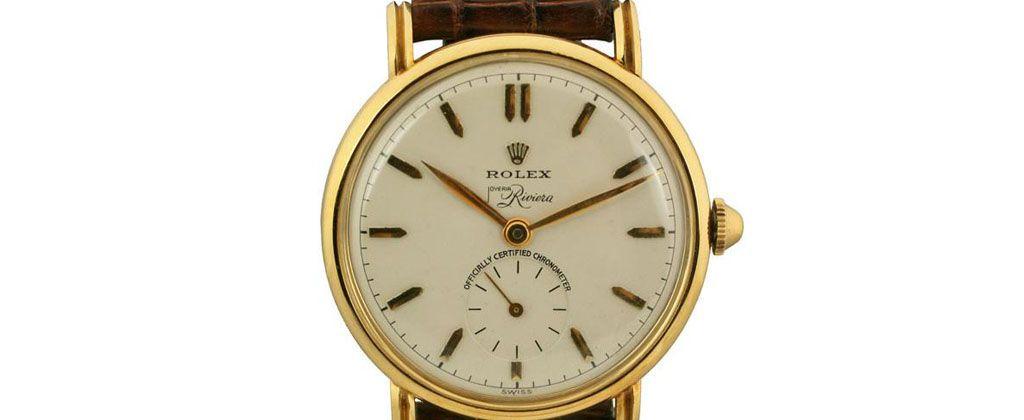

The news that John Mayer – an avid vintage watch collector who has acquired over 100 exceptional timepieces of his favoured manufacturers – recently sued his L.A. based dealer over ‘counterfeit’ Rolex watches caused quite a stir in the collectors’ community, and also brought to light some of the issues surrounding the business of vintage watches.
Essentially, Mayer found out that several of the vintage watches he owned, which he had purchased from his dealer, contained components which were not ‘original’ or ‘authentic’. This assessment came directly from Rolex, known to be very careful in protecting their image, especially when it comes to vintage collectible models.

 The whole issue boils down to authenticity. For vintage collectible watches, authenticity means 100 percent original parts; this is the key factor that ultimately determines the value of the watch. But, authenticity in a vintage piece may be very tricky to both define and establish.
In the past, Rolex outsourced some of their parts from a number of suppliers, which accounts for the minor variations on cases and dials, found mainly on the most popular vintage Submariners and Daytonas from the 1950s and ’60s. These models can be very hard to assess, but fortunately Rolex keeps very good records that watch experts can refer to in order to determine whether a piece is really genuine.
By vintage watch standards ‘counterfeit’ extends to a piece that features any components that were not part of the original watch. Suppose a Rolex watch had a dial or bezel replaced with another Rolex dial or bezel – basically genuine Rolex parts on their own – the resulting watch would be considered by Rolex as ‘counterfeit’, because it’s not 100 percent original; high standards that maintain high interest and, of course, high value.
Insiders have even come up with a term used to describe a vintage watch which has been tinkered with, by replacing different parts: a Frankenwatch. This can mean any replacement of crystals, dials, bezels, cases, hands or crowns, but also internal components and movements.
This causes a problem though. Say your vintage Rolex’s crystal is broken beyond repair, a replacement is necessary. So, what do you do? My advice is to go straight to Rolex before you send that watch in for repair lest you become the next owner of a dreaded Frankenwatch.
Gate Building, DIFC, momentum-dubai.com